

How Trade Wars Could Shape Global Conflict in 2026
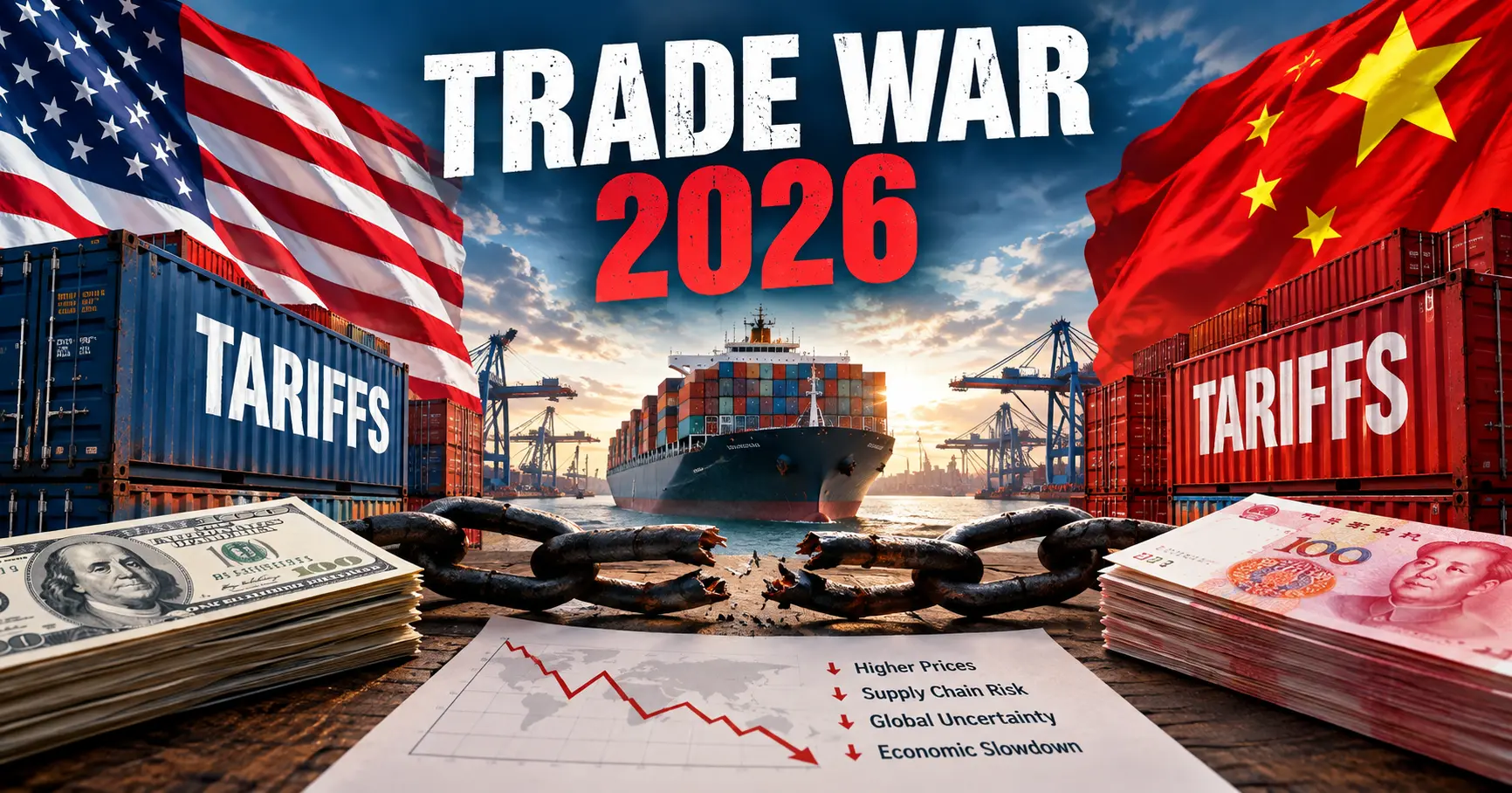
In 2026, trade is becoming a powerful tool in global politics. The trade war 2026 story goes far beyond tariffs and imported goods. Rising trade tensions are affecting businesses, consumers, supply chains, and international relations. The latest Canada-US dispute shows how quickly economic disagreements can escalate between close trading partners.
Canada has now imposed new retaliatory tariffs on around $20 billion of U.S. goods. Meanwhile, growing competition between major economies is putting pressure on global supply chains and increasing uncertainty for businesses.
For the United States, these changes could influence prices, jobs, manufacturing, and national security. Understanding this shift is important because today’s trade disputes could shape tomorrow’s geopolitical tensions and global stability.
What Is a Trade War and How Does It Work?
A trade war begins when countries raise barriers against each other’s goods. Tariffs are one common tool. A government may use them to protect local industries or gain leverage in negotiations. The other country can respond with retaliatory tariffs, creating a cycle of economic pressure.
Think of it like a financial tug-of-war. Each side pulls harder to protect its interests. Yet businesses and consumers can feel the strain too. Higher import costs can spread through factories, stores, and supply chains. That makes a trade war much larger than a simple dispute over taxes.
Why Are Trade Wars Increasing in 2026?
The trade war 2026 trend reflects deeper changes in global politics. Governments now care more about economic security, domestic production, technology, and strategic industries. They also want fewer dangerous dependencies. As a result, trade policy is increasingly linked with national security and political strategy.
At the same time, global commerce faces several shocks. The WTO expects world merchandise trade growth to slow sharply in 2026. Conflict, energy disruptions, and trade restrictions are adding more uncertainty. This pressure can weaken global economic stability and increase trade tensions between major powers.
How the Canada-US Trade War Is Changing Global Trade
The Canada-US trade war shows how quickly a dispute can spread across major industries. Canada imposed new 15%, 25%, and 50% counter-tariffs on selected U.S. products. The measures cover about $27.6 billion in imports and include steel, dairy, appliances, agriculture equipment, and electronics.
This matters because Canada and the United States have deeply connected economies. Companies on both sides depend on cross-border trade. When costs rise, firms may change suppliers or raise prices. The dispute also puts additional pressure on North American trade rules and business confidence.
How US-China Trade Tensions Are Shaping Global Power
US-China trade tensions extend far beyond tariffs. Both countries compete across technology, manufacturing, energy, minerals, and strategic industries. China remains a major manufacturing power while the United States controls important technology and financial networks. Their rivalry therefore affects businesses far beyond their borders.
Recent Chinese trade data shows the scale of this competition. China’s exports jumped 25% year over year in August 2026. High-tech exports rose even faster. At the same time, Washington and Beijing continue exploring tariff reductions. This creates a complicated mix of rivalry and cooperation.
How Trade Wars Affect Global Supply Chains
Modern products often cross several borders before reaching American customers. A phone, car, or machine may contain parts from many countries. Global supply chains therefore depend on stable trade rules. When tariffs rise, companies must reconsider where they buy materials and where they manufacture products.
Some firms may move production closer to home. Others may seek suppliers in Mexico, Southeast Asia, or Europe. This process can improve resilience over time. However, changing factories and suppliers costs money. Sudden policy shifts can also create trade tensions that make long-term planning harder.
How Trade Wars Are Increasing Geopolitical Tensions
Trade disputes can become political disputes when countries see economic pressure as a threat. Governments may answer tariffs with restrictions on technology, minerals, investment, or strategic goods. This turns commerce into a form of economic warfare and creates wider geopolitical tensions.
The danger grows when trade rivalry overlaps with security disputes. A country may begin treating economic dependence as a national security weakness. That mindset can divide the global economy into competing blocs. Instead of one connected market, the world could develop separate economic systems.
The Link Between Trade Wars and Resource Conflicts
The connection between trade and resources is becoming harder to ignore. Critical minerals such as lithium and rare earth elements support batteries, electronics, defense systems, and clean-energy technologies. Countries that control these supplies gain valuable economic and strategic influence.
This creates resource competition alongside trade rivalry. Export controls can become bargaining tools during disputes. Recent G20 discussions highlighted concerns about China’s restrictions involving critical minerals. Trade disputes can also affect oil markets, energy security, and access to other strategic resources. For a deeper look at this connection, explore how oil and resources are fueling global wars in 2026.
How Trade Wars Affect the Global Economy
A prolonged global trade war can affect nearly every part of the U.S. economy. Importers may face higher costs. Manufacturers may pay more for materials and components. Consumers can then see higher prices. Businesses may also delay investment when they cannot predict future trade rules.
| Area | Possible effect |
| Consumers | Higher prices |
| Businesses | Higher production costs |
| Manufacturers | Supplier changes |
| Workers | Job and investment uncertainty |
| Governments | More pressure to protect industries |
| Global markets | Greater uncertainty |
These effects can weaken global economic stability if trade barriers remain in place for too long. However, the impact depends on the countries involved, the products targeted, and how long the restrictions last.
Could Trade Wars Lead to Wider Global Conflict?
A trade war does not automatically become a military conflict. Economic competition can remain peaceful when governments keep communication open. The greater risk appears when tariffs combine with security disputes, resource shortages, technology restrictions, and nationalist politics. That combination can increase the chance of global conflict.
History also shows that economic rivalry can deepen political divisions. Trade disputes can also increase pressure over energy, minerals, and other strategic resources. This is one reason resource wars could shape global conflict as countries compete for supplies that support their economies and security. Still, modern economies have strong reasons to avoid uncontrolled escalation. American companies depend on foreign markets. Other countries depend on U.S. technology, capital, energy, and consumers. Those connections can create powerful incentives for restraint.
Can International Cooperation Prevent Future Trade Wars?
The best way to reduce trade conflict is not to eliminate competition. Countries will always protect important industries. The goal should be managing disagreements without turning every dispute into retaliation. Strong trade agreements, direct negotiations, and trusted institutions can help create that balance.
International cooperation becomes especially important when countries face shared problems. Climate risks, energy security, food supplies, and technology standards cross national borders. Cooperation can lower uncertainty and protect global economic stability while still allowing governments to defend legitimate national interests.
How Fair Trade Can Create a Real Path to Peace
Fair trade does not mean every country gets the same result. It means countries follow clear rules and have reliable ways to settle disputes. When businesses can trade with confidence, nations gain shared economic interests. Those interests can make confrontation more costly and cooperation more attractive.
That idea connects trade directly with world peace. Economic links cannot prevent every conflict. They can create another reason to choose dialogue. A stronger global trading system can also reduce global conflict by giving countries peaceful tools for solving economic disagreements.
Conclusion: Can the World Avoid a Global Trade War?
The trade war 2026 story is really a story about changing global power. Canada and the United States show how quickly tariffs can trigger retaliation. Meanwhile, US-China trade tensions reveal how technology, resources, and manufacturing now shape economic rivalry.
The world still has choices. Governments can use tariffs as weapons or negotiate better rules. They can isolate supply chains or build smarter ones. Most importantly, they can treat trade as a bridge rather than a battlefield. A stronger focus on diplomacy and cooperation can help create a real path to peace in a divided world.
Frequently Asked Questions
Q:1 Why is Trump in a trade war with Canada?
Answer: Trump says tariffs can protect U.S. industries, reduce trade imbalances, and pressure Canada on economic and security issues.
Q:2 Which wars are going on in 2026?
Answer: Major ongoing conflicts in 2026 include wars and armed conflicts involving Russia and Ukraine, Iran and regional actors, Sudan, Myanmar, and parts of the Sahel.
Q:3 How’s the trade war going?
Answer: The trade war in 2026 remains tense. Canada has imposed 15%–50% counter-tariffs on $27.6 billion of U.S. imports.
Q:4 Why did Trump start the trade war?
Answer: Trump has used tariffs to protect U.S. industries, gain leverage in trade negotiations, and address concerns about trade imbalances and economic security.
Q:5 Could China survive without the US?
Answer: Yes, China could continue trading without the U.S., but losing access to the American market would create major economic costs.
Leave a Reply