

Why Is China So Important to the World?
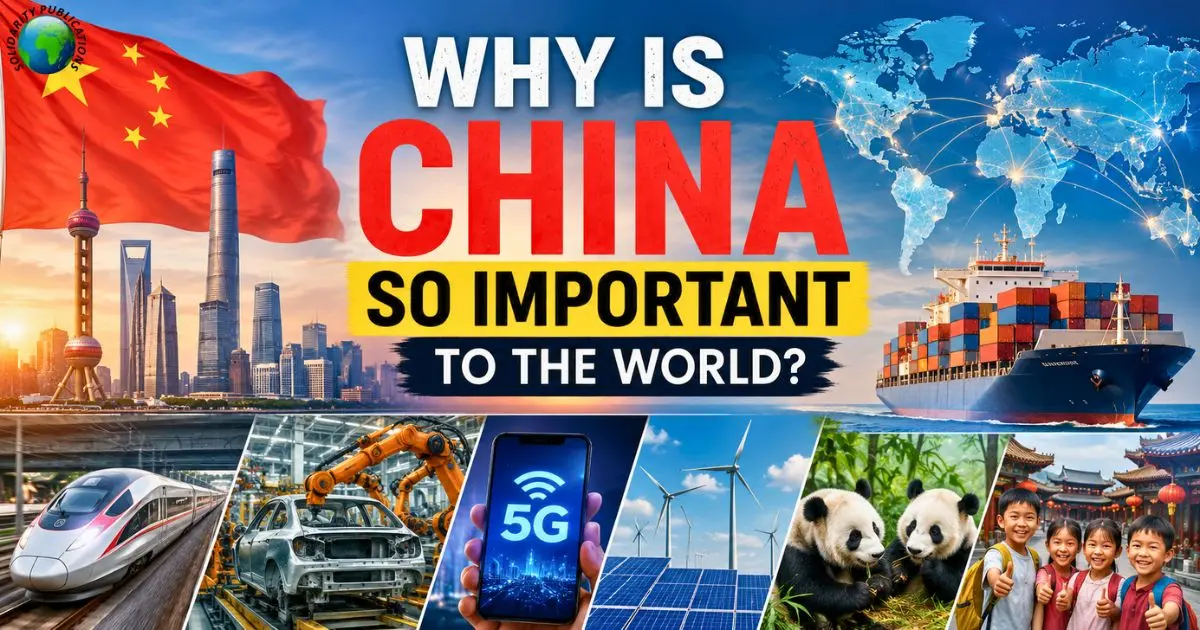
China has become one of the most important countries in the world. Its influence reaches far beyond its borders through trade, manufacturing, technology, and diplomacy. The country plays a major role in the global economy and connects businesses through global supply chains. It processes and supplies a large share of key materials, including critical minerals, which are needed for electric vehicles and clean energy.
Its growing geopolitical influence also affects relations between major powers, especially the United States and Europe. Understanding China’s Global Importance helps explain today’s global power competition. It also shows why China’s choices can shape international cooperation, economic stability, security, and the search for lasting peace around the world.
Why Is China So Important to the Global Economy?
China has become a major pillar of the global economy, supported by decades of industrial growth, trade, and investment. Its huge production base supports millions of jobs and businesses worldwide. Changes in Chinese demand can also affect commodity prices, factories, shipping, and economic growth far beyond Asia.
For Americans, this connection can feel distant. Yet a disruption in Chinese production can eventually affect prices and product choices in the United States. The World Bank expects China’s growth to slow as trade restrictions, weak property markets, and demographic pressures increase.
| Area | Why China Matters |
|---|---|
| Manufacturing | Major global production center |
| Trade | Large exporter and importer |
| Technology | Major producer of advanced goods |
| Minerals | Key refining and processing power |
| Consumers | Huge domestic market |
| Investment | Major source of overseas infrastructure finance |
China’s Manufacturing Power and Global Production
Chinese manufacturing gives the country enormous economic weight. It produces electronics, machinery, vehicles, batteries, chemicals, clothing, and industrial equipment. This industrial depth lets companies source many parts from one broad ecosystem instead of building every stage somewhere else.
That advantage has grown in newer industries too. China produced around 16 million electric cars in 2025, accounting for about 75% of global electric-car production.
China’s Role in Global Trade
China plays a major role in global trade through its huge network of suppliers, buyers, and trade partners. Its trading network includes raw materials, machinery, electronics, vehicles, chemicals, and energy products. Its exports and imports connect Chinese factories with suppliers and customers across Asia, Europe, Africa, Latin America, and North America.
This network also gives China strategic importance during trade disputes. When tariffs or restrictions change, businesses often adjust sourcing and shipping routes. The result can affect prices and production far beyond China’s borders. That is why China remains central to international commerce.
Why China Dominates Critical Mineral Supply Chains
China’s importance becomes even clearer when you examine critical mineral supply chains. Minerals such as lithium, graphite, cobalt, and rare earth elements support batteries, electronics, defense systems, power grids, and clean-energy equipment. Mining matters, but mineral processing and refining can matter just as much.
Rare earths show the scale of this advantage. In 2024, China produced about 60% of mined magnet rare earths. It handled about 91% of refined output and 94% of permanent magnet production. These magnets support electric vehicles, wind turbines, electronics, and defense technology.
| Critical area | China’s significance |
|---|---|
| Rare earth mining | Around 60% of magnet rare-earth mining in 2024 |
| Rare earth refining | Around 91% of refined output |
| Permanent magnets | Around 94% of global production |
| Battery materials | Major processing and manufacturing base |
| Clean energy | Major producer of related equipment |
This concentration creates both economic and security risks. The IEA warns that concentrated mineral supply chains can expose large industries to disruption. Its 2026 outlook also notes that refining concentration increased for many minerals during 2025.
China’s Huge Consumer Market
China’s huge consumer market gives international companies access to hundreds of millions of consumers. Chinese households buy cars, smartphones, appliances, food, travel services, and digital products on a huge scale.
However, China’s consumer story is changing. The World Bank says household consumption will become increasingly important as external demand faces greater pressure. This shift could influence Chinese companies and global brands that depend on Chinese customers.
How China Influences Global Supply Chains
The real strength of China lies in how production stages connect. A product may use minerals processed in China, components made by Chinese suppliers, and final assembly performed elsewhere. This creates global supply chains with strong Chinese links.
That structure explains why supply chain diversification has become a major policy goal. Companies can move some production to India, Vietnam, Mexico, Southeast Asia, or other regions. Yet replacing an entire industrial ecosystem takes years and requires skilled workers, infrastructure, suppliers, and investment.
China’s Growing Geopolitical Influence
China’s influence now reaches well beyond factories and trade. Through investment, diplomacy, infrastructure, and international institutions, Beijing has expanded its role in global affairs. The Belt and Road Initiative has helped connect China with countries through transport, energy, digital infrastructure, and other development projects.
This gives China new economic and diplomatic relationships across the Global South. At the same time, countries do not always see Chinese influence in the same way. Economic pressure can also reshape these relationships, as economic sanctions increasingly influence global power. Some view investment as an opportunity, while others worry about debt, strategic dependence, or political leverage.
Why China Matters to the United States and Europe
For the United States, China represents both a major economic partner and a strategic competitor. US-China relations now involve trade, technology, investment, military security, and critical minerals. Washington wants stronger economic resilience without completely severing important commercial links.
Europe faces a similar balancing act. China-Europe relations remain deeply connected through trade. In 2025, China was the EU’s largest source of goods imports, accounting for 22.3% of total EU imports.
The relationship is therefore complicated. Europe wants open trade and access to Chinese products. It also wants stronger national security, fair competition, and less exposure to strategic supply risks.
Could China’s Rise Affect Global Peace?
China’s global importance becomes especially significant when economic power meets military and political competition. A stronger China can increase global power competition, especially when its interests clash with those of the United States and its allies.
Still, China’s rise does not automatically lead to conflict. Trade, investment, climate action, health, and technology create shared interests. Strong diplomacy can help manage disagreements before they become larger crises. The real challenge is keeping competition from destroying useful cooperation.
Can the World Reduce Its Dependence on China?
Many countries are trying to reduce economic dependence on China. They are building alternative factories, securing mineral supplies, expanding domestic production, and encouraging companies to diversify suppliers. The goal is usually not complete separation. It is greater resilience when disruptions occur.
The mineral sector shows why this process takes time. The IEA says China is expected to remain the dominant refined supplier for many key minerals even as new projects expand elsewhere.
| Strategy | Main purpose |
|---|---|
| Supplier diversification | Reduce single-country exposure |
| Domestic production | Strengthen local capacity |
| Recycling | Lower demand for new raw materials |
| New partnerships | Create alternative supply networks |
| Strategic reserves | Provide protection during disruptions |
What Will China’s Role in the World Look Like in the Future?
China’s future role will depend on its economy, technology, demographics, trade relationships, and foreign policy. Slower population growth and weaker productivity may create pressure. Yet its industrial base, infrastructure, technical skills, and large market remain powerful advantages.
China is also moving deeper into advanced technologies, batteries, electric vehicles, automation, and advanced technology. These industries could keep China central to the global economy even if older growth models lose momentum.
The emerging world may therefore become more of a multipolar world, where several major powers influence trade, technology, finance, and security. China will likely remain one of its most important centers.
How China’s Global Importance Affects World Peace
The deeper lesson behind China’s Global Importance is that economic power can create both risks and opportunities. Dependence can make countries vulnerable, yet shared economic interests can also make cooperation more valuable.
For that reason, international cooperation matters. Countries can compete while maintaining dialogue, protecting trade routes, sharing climate goals, and reducing dangerous dependencies. This approach supports global stability without requiring every country to agree on politics.
China’s position also shows why resource competition needs careful management. When minerals, energy, technology, and trade become strategic weapons, economic disputes can quickly create geopolitical tensions. Better rules and stronger conflict prevention can reduce that danger.
Conclusion: Why China’s Global Importance Goes Beyond Economics
So, China’s Global Importance goes far beyond its economic size. China is a manufacturing giant, a major trading power, and a critical player in modern technology.
Its influence also reaches diplomacy, infrastructure, supply chains, and global security. That creates difficult choices for the United States, Europe, and other countries. They must reduce serious risks without creating new ones through unnecessary economic separation.
Ultimately, China’s Global Importance comes from the way its choices can affect countries around the world.
A stable relationship between major powers can support global peace. It won’t solve every conflict, but it can create space for dialogue and cooperation. This is the idea behind a Real Path To Peace, where countries work together to manage tensions and build a safer, more stable world.
Leave a Reply