

Can Critical Minerals Prevent Future Global Conflicts?
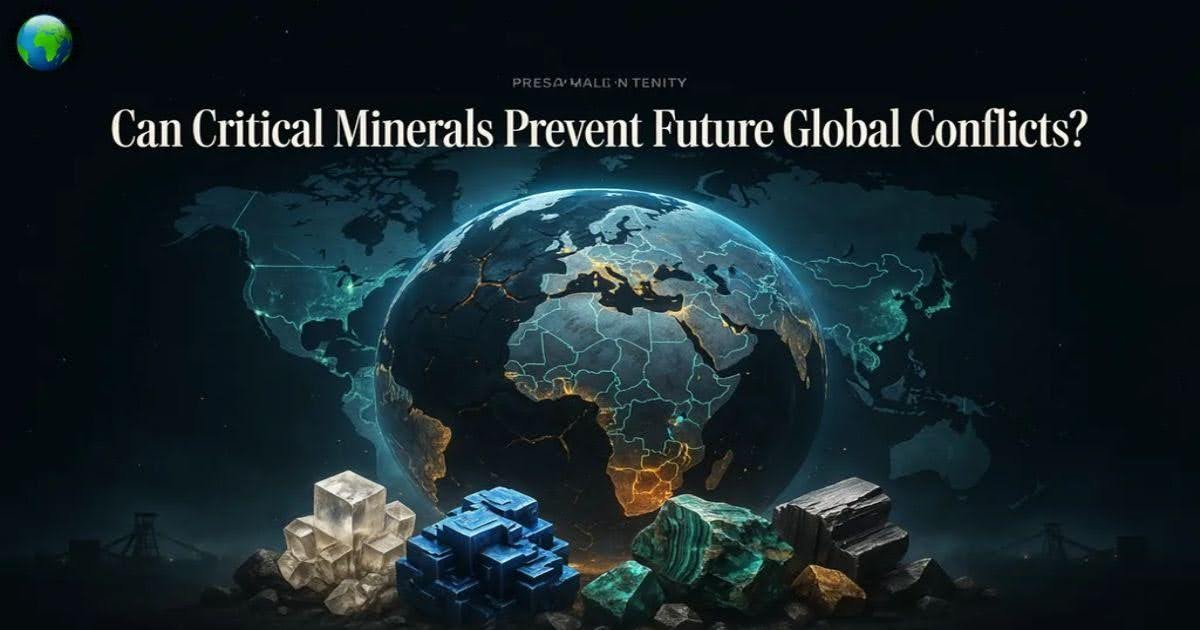
Every electric car, smartphone, and wind turbine depends on critical minerals. These minerals could become a driver of conflict or a reason for countries to cooperate. As countries race to secure these resources, one important question is emerging: Will they lead to future conflicts or create new opportunities for global cooperation?
Countries are rushing to secure reliable supplies as demand continues to grow. This race may increase global tensions between countries. It can also encourage nations to trade, invest, and form stronger partnerships.
With responsible mining and fair agreements, nations can gain from each other’s resources without conflict. Critical minerals could increase tensions or encourage countries to cooperate. The choices made today will help shape global peace for years to come.
Why Critical Minerals Are Strategic Resources
Critical minerals are natural resources that modern industries need to make essential products. They are used in electric vehicles, batteries, smartphones, computers, solar panels, and wind turbines. Lithium, cobalt, nickel, copper, and rare earth elements are key examples.
More people are buying electric cars as countries expand clean energy systems. This increases demand for the minerals used to build them.
Not every country has large supplies of these minerals. Some key resources are found mainly in a few countries. This makes a safe and reliable supply essential. If supplies are disrupted, factories may slow down and prices may rise.
That’s why governments are opening new mines, improving processing, and recycling old batteries.
These resources are more than raw materials today. They support new technology, clean energy, and economic growth. This makes them strategic resources for countries around the world.
Below is a simple list of important critical minerals and their main uses.
| Industry | Critical Minerals | Why They Matter |
|---|---|---|
| Electric Vehicles | Lithium, cobalt, nickel | Battery production |
| Solar Energy | Copper, silicon, rare earth elements | Renewable power systems |
| Technology | Silicon, rare earth elements | Chips and smartphones |
| Defense | Titanium, tungsten, rare earth elements | Advanced equipment |
| AI (Artificial Intelligence) | Silicon and semiconductor materials | Power chips and data centers |
Why Critical Minerals Matter to the Global Economy
1. Why Import Dependence Creates Risk
The U.S. and other major economies depend on imports for many of these resources. This can create risks when supplies are disrupted. The country is investing in domestic mining, recycling, and partnerships with trusted countries to make its supply chains safer.
2. Mining Is Only the First Step
Mining is only the first step. These materials must also be processed and refined before factories can use them. Some countries have mineral deposits but lack enough processing facilities. This can create another supply problem.
3. Why Processing Matters
China plays a major role in processing several key minerals. This gives it strong influence over parts of the global technology supply chain. Other countries are now investing in new processing plants to reduce their dependence on one source.
4. Building Safer Supply Chains
No country can produce every critical mineral it needs. The goal is to build safer supply chains through international partnerships, better technology, domestic production, and recycling.
How Critical Minerals Are Changing Global Geopolitics
Competition over critical minerals can change relations between countries. These minerals are needed for electric cars, batteries, computers, and clean energy systems. Their growing value is making them an important part of global trade and geopolitics.
Only a few countries have large supplies of some key resources. This can give those countries greater influence in global trade. Other nations are looking for new sources and stronger partnerships to avoid supply problems.
Rivalry over minerals can also create tensions between countries. Disputes may involve trade, mining rights, prices, or control of resources.
At the same time, these resources can encourage countries to work together. Sharing technology, expanding trade, and building strong supply partnerships can strengthen ties.
Critical minerals will keep affecting world politics as countries move toward clean energy.
China’s Role in Critical Mineral Supply Chains
China is a major player in global mineral supply chains, especially in processing and refining. These resources support electric cars, smartphones, and solar panels.
- Mining vs. Processing: Other countries mine many of these resources, while China has a major role in processing and refining several critical minerals.
- Global Impact: Because so many factories rely on Chinese refining, any disruption or export limit in China can slow down tech and car production worldwide.
- Building Alternatives: To avoid over-relying on a single country, nations like the U.S., Canada, Australia, and European Union members are spending billions to build their own processing plants.
- Teamwork: Countries are forming international partnerships to share resources and create safer supply chains as demand for technology grows.
The table below shows the main countries involved in critical mineral supply chains and their key roles.
| Country | What They Bring to the Table |
|---|---|
| China | Major mineral processing capacity |
| United States | Domestic supply and processing investment |
| Australia | Major lithium producer |
| Canada | Major mining and resource partner |
| Chile | Large lithium reserves |
| Democratic Republic of the Congo | Major cobalt producer |
The Global Race for Lithium (Case Study)
The global push for electric cars and green energy has turned lithium into “white gold.” Because lithium is essential for making powerful batteries, countries around the world are racing to control how it’s mined, processed, and used.
- Australia (Major Lithium Producer): Australia is a major producer of mined lithium, much of it from hard-rock deposits. A large share of its lithium is exported for further processing into battery materials.
- Chile (Major Lithium Reserves): Chile has some of the world’s largest lithium reserves, much of them found in salt-flat regions. Traditional extraction pumps brine into large ponds, where water evaporates and lithium can be recovered. This method can raise concerns about water use in dry areas.
- China (Major Lithium Processor): China is not the world’s largest lithium miner, but it has a major role in lithium processing and battery supply chains. It processes raw materials into battery-grade products used by manufacturers around the world. China’s strong processing role gives it major influence over the battery market.
- USA (Building Domestic Supply): The United States is expanding domestic lithium mining and processing. The government and private companies are investing in local projects to reduce supply risks. However, new mining and processing projects can face environmental concerns, local opposition, and long approval processes.
Why Global Demand for Minerals Is Increasing
EVs and Batteries
Electric cars run on batteries. These batteries need minerals such as lithium and cobalt. As more people buy electric cars, demand for these materials keeps growing.
Renewable Energy
Solar panels and wind turbines also need many minerals. Copper and other materials help these systems produce clean electricity. As countries build more renewable energy projects, mineral demand will continue to rise.
Electronics and AI
Smartphones, laptops, and other devices all depend on minerals. Large computers that support artificial intelligence also need advanced materials. As technology expands, demand for these resources will rise too.
Can Critical Minerals Become a Source of Future Conflicts?
Critical minerals could become a source of conflict if countries compete for control. However, they could also encourage cooperation through fair trade, shared investment, and stronger supply chains.
These resources are not distributed equally around the world. Some countries have large deposits, while others depend heavily on imports. This difference can create competition as countries try to secure supplies for their industries.
Supply problems can create disputes over trade, mining rights, prices, or access to resources. If these disputes grow, they can damage relationships between countries and increase political tensions.
However, nations can choose cooperation instead of confrontation. Diplomacy can help countries settle disputes before they become larger conflicts.
Lessons the World Can Learn from Critical Mineral Competition
Cooperation can reduce the risks created by intense competition. The world has learned important lessons from past resource struggles. Countries once competed heavily over oil and natural gas. Today, critical minerals are gaining attention because they are needed for clean energy and modern technology.
One important lesson is that relying too heavily on one country can create risks. If the supply dries up, factories could slow down, the price could go up and businesses could have issues.
Countries can create fair trade agreements, share resources, and help each other during shortages. These steps can build trust and help keep mineral supplies flowing.
Compared to the past, many countries are now developing and re-opening mines, as well as recycling old batteries. These steps can help reduce the risk of future shortages.
The main lesson is simple: countries need stable and fair access to these resources. If countries forgo the conflict and opt for collaboration, all parties benefit. This results in more robust economies, clean energy and a peaceful future.
How International Cooperation Improves Mineral Security
These resources are essential for the future of technology and clean energy. They are used in electric vehicles, smartphones, batteries, and renewable energy systems. However, these resources are not found equally around the world.
Some countries have large mineral reserves, while others depend on imports. This difference can create supply risks and make cooperation more important.
This is why international partnerships matter. Countries can trade resources, share technology, and create fair agreements. These steps can make supplies more reliable and reduce the risk of disputes.
Joint efforts can also lower the risk of disputes. Countries can share better methods for mining and recycling old materials. No country can solve mineral supply challenges alone. Strong international partnerships can help create a safer and more reliable future.
How Sustainable Mining Supports Global Stability
Mining provides us with valuable metals used in a variety of technologies, such as phones, cars and laptops. However, traditional mining can damage forests, pollute rivers, and harm the soil. This causes local residents to get angry and brings about large-scale demonstrations and outcry.
Sustainable mining aims to reduce these problems. It focuses on limiting environmental damage while protecting workers and nearby communities. Responsible companies also restore mining areas after operations end.
Better mining practices can reduce local disputes and build trust with nearby communities. Sustainable mining can support reliable supplies while reducing harm to local communities. It can also protect nature, create jobs, and support economic growth. These benefits can support peace and stability in mineral-rich regions.
A responsible mineral plan should answer three simple questions:
| Question | Why It Matters |
|---|---|
| How are minerals extracted? | Shows whether mining protects or harms nature. |
| Who benefits from the revenue? | Shows whether local communities receive a fair share. |
| What standards guide mining? | Shows whether resources can be managed safely for the future. |
Mining can also affect peace and stability. If companies damage the land or ignore local communities, disputes can grow. Fair mining practices can instead create jobs, improve infrastructure, and build trust. When companies and governments act fairly, mining can create jobs and improve local roads and services.
For instance, mineral-rich nations can invest their wealth in schools, technology, and new businesses. By doing this, mineral wealth can support long-term economic growth and improve local communities.
How Responsible Mining Protects Future Mineral Supplies
Every day, we use metals such as copper, lithium, and nickel in phones, game consoles, and electric cars. Yet when companies mine carelessly, they can destroy forests, pollute rivers, and damage local land.
Responsible mining aims to reduce environmental harm while protecting workers and local communities. Good companies recycle their water, plant new trees and power their big machines with solar or wind.
They also provide fair wages and safer working conditions. Fair treatment can reduce protests, labor disputes, and opposition from local communities.
Good mining practices can keep mines productive for longer. They can also protect nature and local communities.
| Practice | Why It Helps |
|---|---|
| Cleaner Digging | Prevents pollution and protects trees and soil. |
| Saving Clean Water | Protects rivers and water supplies for communities. |
| Protecting workers | Provides safe equipment, fair wages, and better working conditions. |
| Helping Local Towns | Supports roads, schools, hospitals, and local jobs. |
| Restoring mined land | Helps return damaged land to a healthier condition. |
Responsible mining can reduce environmental damage, local disputes, and opposition from nearby communities. It can also make mining projects more stable for workers, businesses, and investors. Better practices can also give investors more confidence.
It provides an easy chain:
1. Responsible mining → Safer and more stable mining operations.
2. Stable mining → More reliable supplies for factories.
3. Reliable supplies → Fewer supply shocks for technology and manufacturing.
How to Build a Sustainable Mineral Future
There is a great demand for metals in the manufacturing of electronics such as mobile phones, computers, and electric vehicles. However, mining can damage forests, increase water use, and worsen water scarcity in some regions. We need better ways to obtain these metals without harming the environment.
The first step to take is to recycle. We can break down old phones and dead batteries to recover the copper, gold, and lithium inside them and re-use it rather than discarding it in the trash. This can reduce the need for new mining.
In addition, big machines used in the mining industry should be powered by solar and wind energy instead of dirty gas.
By recycling more and mining carefully, we can better protect nature. This can help provide metals for new technology while reducing harm to the planet.
Key Solutions for a Sustainable Mineral Future
| Solution | Easy Benefit |
|---|---|
| Battery recycling | Recovers valuable metals and reduces the need for new mining. |
| Alternative materials | Reduces dependence on scarce minerals. |
| New technology | Helps reduce waste and environmental damage. |
| Better processing | Improves efficiency and reduces waste. |
| Circular economy | Keeps valuable metals in use for longer. |
Technology is also changing modern mining. Artificial intelligence can help companies study land and identify areas that may contain valuable minerals. Better mapping can reduce unnecessary drilling and limit damage to forests and other natural areas.
The world will need a lot more metals as more and more cars, computers and solar power plants are constructed. New technology can help meet rising demand with less waste and damage.
The goal is not simply to find more resources. We also need to use them wisely and protect local communities.
A Realistic Road To Peace Through Responsible Resource Cooperation
Minerals such as lithium, copper, and other valuable resources can bring major economic benefits. However, poor governance, unfair deals, and competition over resources can also increase tensions in some resource-rich regions. These problems can hurt communities and slow economic growth.
Countries do not have to compete through conflict. They can work together through fair resource agreements. This can include fair trade, shared investment, modern technology, and strong safety standards. Rich and developing nations can both benefit from these arrangements.
Mining projects can provide jobs and fair wages when companies follow strong labor standards. Mining revenue can help pay for local schools, hospitals, and better roads.
When local communities see clear benefits from mining, trust can improve. Fair revenue sharing, jobs, and environmental protections can help reduce local tensions. When countries work together, these resources can support long-term peace.
Benefits of international cooperation
| What Countries Do | What Improves |
|---|---|
| Share supply routes | Fewer supply disruptions |
| Trade fairly | Stronger relationships |
| Protect nature | Healthier communities |
| Share technology | Better production |
| Be transparent | Greater trust |
Countries need open communication and cooperation to secure enough resources for the future. Clear communication can reduce misunderstandings and lower the risk of resource disputes.
Countries with rich mineral deposits should receive a fair share of the value created from their resources. Instead of exporting only raw materials, they can develop local processing facilities, create safer jobs, and keep more economic value at home.
In the end, it is a matter of balance. Competition can create disputes, while cooperation can make mineral supply chains safer and more stable.
Conclusion
Critical minerals are becoming some of the world’s most important strategic resources. They support clean energy, electric vehicles, modern technology, and many industries that people depend on every day. As demand continues to grow, countries will face an important choice. They can compete for these resources and increase tensions, or they can work together to build a safer future.
International cooperation, responsible mining, fair trade, and stronger supply chains can reduce the risk of future conflicts while protecting the environment and supporting economic growth. Recycling valuable minerals and investing in new technologies can also help meet future demand without putting unnecessary pressure on natural resources.
In the end, critical minerals do not have to become a cause of conflict. When countries choose cooperation over competition, these resources can help create stronger economies, cleaner energy, and greater global stability. The choices made today will shape mineral security and global peace for years to come.
Frequently Asked Questions (FAQs)
Q1: Are critical minerals the new oil?
Answer: Critical minerals are becoming as strategically important as oil. They power clean energy, electric vehicles, and modern technology.
Q2: What are mineral resources and why are they important?
Answer: Mineral resources are naturally occurring materials that can be extracted and used for industry. Some are essential for batteries, electronics, renewable energy, and defense. They help power modern industries and future technologies.
Q3: Which countries dominate critical mineral supply chains?
Answer: China leads in mineral processing, while Australia, Chile, Canada, and the Democratic Republic of the Congo are major producers of key minerals.
Q4: Can critical minerals prevent future global conflicts?
Answer: Critical minerals alone cannot prevent conflicts. However, international cooperation, fair trade, and responsible mining can reduce tensions and support global stability.
Q5: Can cooperation over strategic minerals reduce global tensions?
Answer: Yes, they can help if countries choose cooperation over competition. Sharing resources fairly can strengthen economies and reduce the risk of future conflicts.
Leave a Reply