

Social Media and Conflict: Can It Build Peace?
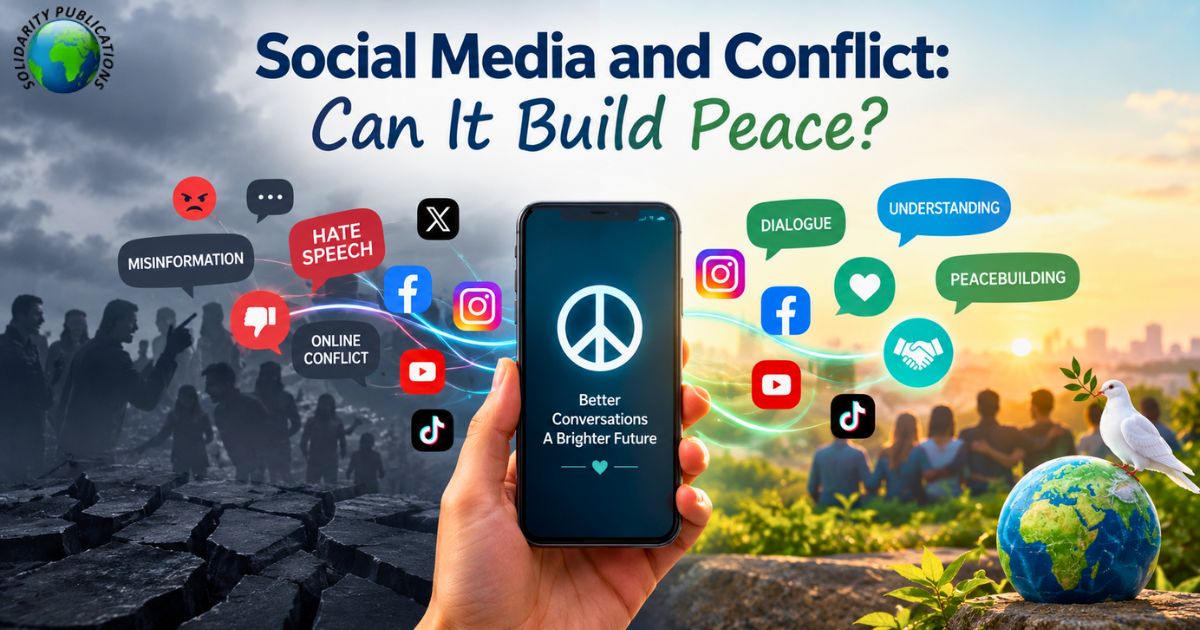
Social media and conflict are closely connected in today’s digital world. Social platforms help people share news, discuss public issues, and connect across communities. Yet the same tools can spread misinformation, encourage disinformation, and turn disagreements into personal attacks. A misleading post can reach thousands of users before anyone checks whether it is true.
Repeated hostile messages may also deepen distrust between groups and shape how people view one another. However, social media can support understanding when users share reliable facts, listen to different perspectives, and encourage peaceful dialogue. With responsible platform policies and stronger digital skills, digital peacebuilding can help communities challenge harmful claims and build trust over time.
Social Media and Conflict: What Are the Main Causes?
Social media can increase conflict when people share false information, attack other groups, or react to emotional messages without checking the facts. These problems can deepen existing divisions and create distrust between communities. Four common causes help explain why online disagreements sometimes become more serious.
Misinformation and Disinformation
Misinformation is false information shared without necessarily intending to mislead others. Disinformation is false or misleading information spread deliberately. Both can confuse people, damage reputations, and create fear, especially during political disputes or public crises.
Hate Speech
Hate speech targets people because of their identity or group membership. When social media users repeatedly see hateful messages, they may become more suspicious of other communities. Such content can also make targeted people feel unsafe and unwelcome.
Political Polarization
Political polarization grows when people become deeply divided over political beliefs. Social media discussions can worsen these divisions when users insult opponents instead of discussing their ideas. Over time, people may begin to see those who disagree with them as enemies rather than fellow citizens.
Algorithms and Echo Chambers
Social media platforms recommend content based on different signals, including users’ activity and interests. This can create echo chambers, where people repeatedly encounter similar opinions and see fewer opposing views. However, algorithms do not explain every form of division, and research suggests that the relationship between social media and political attitudes is complex.
These causes can also overlap. For example, a false claim may encourage hateful comments, while an echo chamber may strengthen users’ belief in that claim. Understanding these connections helps explain why social media and conflict can become difficult to manage.
How Online Conflict Affects Real-Life Communities
Conflict online can affect people long after they close an app. False accusations may damage someone’s reputation, while threats and repeated harassment can create fear. Members of a targeted community may feel unwelcome in public spaces or avoid discussing their identity. When people repeatedly see hostile claims about another group, they may begin to distrust neighbors they have never met. These effects can weaken relationships within families, workplaces, schools, and local communities.
Social media can also shape public opinion during elections, protests, emergencies, and international crises. A misleading claim may influence how people understand an event before trustworthy reporting becomes available. This does not mean that every disagreement leads to violence. Most online arguments do not automatically turn into physical conflict. The risk increases when false claims meet existing grievances, public fear, or organized efforts to target a group. Recognizing these warning signs helps communities respond before tensions become harder to resolve.
How Can Social Media Help Build Peace?
Social media can give people a way to understand experiences beyond their own communities. A teacher can share educational resources, a local organization can explain a misunderstanding, and community members can challenge stereotypes through personal stories. These conversations can replace assumptions with real experiences. Used thoughtfully, social media for peace can help people recognize shared concerns and understand why others may see an issue differently.
It can also support conflict resolution by helping people exchange information and maintain communication during difficult situations. Community leaders can correct rumors, share verified updates, and invite people to discuss local problems. However, posting a message about peace is not enough by itself. Successful digital peacebuilding requires trust, clear information, and participation from people who understand the local context. Peace messages should also respect genuine concerns instead of dismissing them or asking affected communities to remain silent. Building peaceful communities requires more than reducing online conflict. To understand why peace matters in everyday life and society, read Why Is Peace Important in Today’s World?.
What Does Social Media Peacebuilding Look Like in Practice?
Real-world examples show how online platforms can support efforts to reduce division. UNESCO’s Social Media 4 Peace initiative works to strengthen societies’ ability to respond to harmful online content while protecting freedom of expression. Since 2021, the initiative has operated in four pilot countries: Bosnia and Herzegovina, Colombia, Indonesia, and Kenya. Its approach recognizes that local history, language, and social tensions matter when developing responses to harmful content.
Another example comes from Sri Lanka. A United Nations peacebuilding project focused on education, advocacy, and social cohesion. Its monitoring work reported 3,932 harmful posts, comments, and videos across platforms including Facebook, YouTube, and TikTok. Trusted partner channels helped secure the removal of 2,291 items, or about 58% of the reported content. This example shows how monitoring, reporting, education, and cooperation can work together. It does not prove that removing posts alone resolves wider social tensions, but it demonstrates a practical response to harmful online material.
| Example | Approach | Lesson |
| UNESCO Social Media 4 Peace | Builds resilience to harmful content while protecting freedom of expression. | Responses should fit local needs and respect rights. |
| Sri Lanka peacebuilding project | Monitored harmful content and supported reporting, education, and advocacy. | Cooperation can help address harmful narratives. |
These examples show that peacebuilding initiatives can take many forms. They may include community education, support for credible reporting, online discussions, and campaigns that challenge stereotypes. The goal is not to make everyone agree. It is to create space for people to disagree without encouraging hatred or harm.
Why Is Online Peacebuilding So Difficult?
Peacebuilding online faces practical and social barriers. False claims can spread faster than careful explanations, and users may trust information that confirms what they already believe. People also bring their existing fears and experiences into digital spaces. In some communities, speaking openly can lead to harassment or threats. Language differences and limited access to reliable news can make accurate information harder to find. These challenges mean that peace campaigns must do more than publish positive messages and hope people will respond.
There is also a difficult balance between safety and free expression. Platforms need to address threats and targeted abuse without treating every unpopular opinion as harmful content. Poorly designed content moderation can remove legitimate discussion or fail to protect vulnerable users. Meanwhile, a campaign’s popularity does not automatically prove that it has reduced conflict. Likes, shares, and views measure activity, not necessarily changes in trust or behavior. Stronger evaluation should examine whether people gained accurate knowledge, felt safer, or became more willing to engage with others peacefully.
How Can Users and Platforms Reduce Online Conflict?
Users can reduce harm by checking information before sharing it. Fact-checking means examining a claim against credible sources rather than trusting a dramatic caption or popular post. People should look for the original source, check the date, and compare the claim with reliable reporting. They should also consider whether an image or video comes from the event being discussed. If evidence is unclear, waiting to share can prevent confusion from spreading. The United Nations recommends pausing before sharing, checking claims, speaking against hatred calmly, and reporting harmful content when appropriate.
Platforms also have a responsibility to apply clear rules consistently, respond to credible threats, and explain important moderation decisions. They can give users accessible reporting tools and reduce the reach of coordinated abuse. Schools, journalists, and community groups can strengthen digital literacy by teaching people how to recognize misleading claims and understand online manipulation. They can also create opportunities for peaceful dialogue, where people listen carefully and discuss difficult issues without attacking one another. These steps work best when platforms, users, educators, and community leaders share responsibility instead of expecting one group to solve every problem.
Conclusion: Turning Social Media Into a Tool for Peace
Social media and conflict are closely connected because online platforms influence how people exchange information and view other communities. Misleading claims, hostility, and repeated stereotypes can increase division. Yet the same platforms can spread reliable information, encourage empathy, and support cooperation. The result depends on how people use these tools and how platforms respond to harmful behavior.
Building peace online requires more than asking people to be kind. It needs responsible sharing, stronger media skills, fair moderation, and peacebuilding initiatives grounded in real community needs. Each user can help by checking claims, rejecting hate speech, and making room for respectful disagreement. These choices will not end every conflict, but they can help protect trust and reduce avoidable harm. For more insights into peace, justice, and a more peaceful world, visit Real Path to Peace.
Leave a Reply