

Strait of Hormuz Crisis 2026: What Happens If It Closes and How It Affects Global Peace
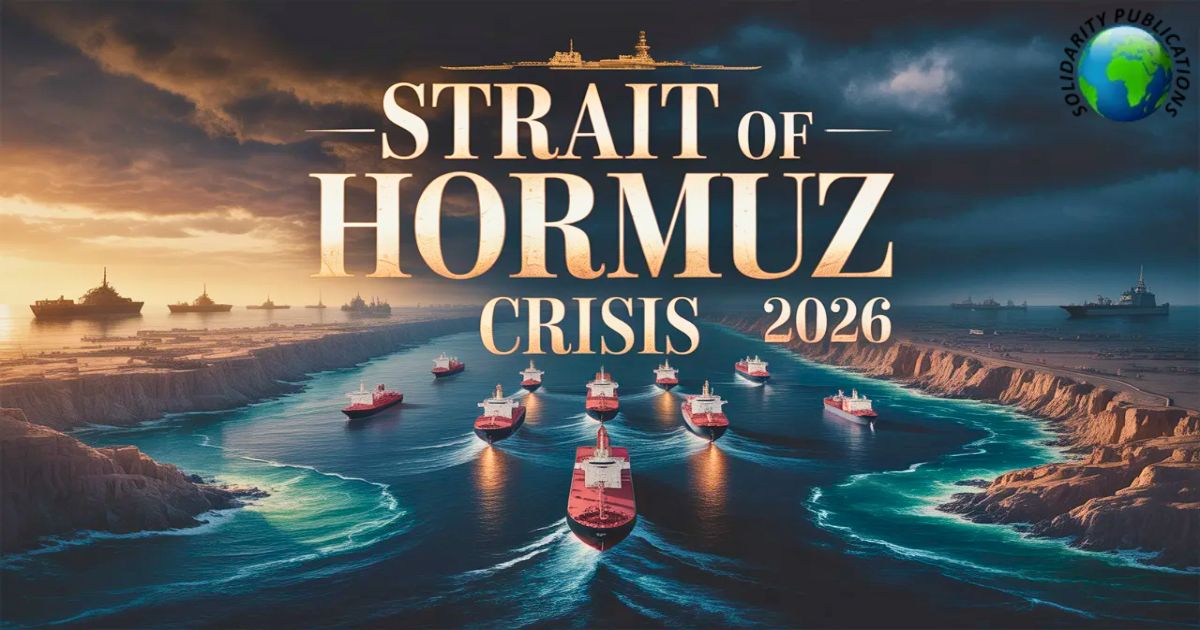
The Strait of Hormuz crisis 2026 is shaking global energy stability in unexpected ways. This narrow waterway controls a major part of the world’s oil flow. Any disruption here quickly affects prices and trade worldwide. The situation has pushed markets into a state of uncertainty and fear.
Experts now warn about a rising global oil supply route imbalance and growing energy market instability across regions. At the same time, the crisis highlights how fragile modern systems really are. With rising tensions, the world faces serious questions about energy security, trade safety, and long-term stability. Understanding this crisis is now more important than ever for global awareness and planning.
What Is the Strait of Hormuz and Why It Matters Globally
The Strait of Hormuz sits between Iran and Oman. It acts as a vital bridge between the Gulf and global markets. This narrow path handles massive energy movement daily. It is a key global oil transit route and supports heavy Gulf energy trade.
Its importance goes beyond oil. The route also supports LNG trade through Hormuz and connects global supply chains. Under international maritime law, ships pass through shared waters. Yet rising maritime security risks and territorial waters control issues create constant tension.
The strait also functions as a global trade chokepoint. Any delay disrupts shipping worldwide. The system is fragile. Even small conflict signals can trigger panic across the global energy supply chain.
Why the Strait of Hormuz Is the World’s Most Critical Oil Route
The Strait handles nearly 20% of global oil flows. This makes it the most critical global oil supply route. Major Middle East oil exports depend on this narrow channel. Countries rely on this for economic survival.
This route also supports a massive global LNG supply chain. Nations with high energy export dependency depend on steady flows. Experts highlight the war and oil prices connection here. Even rumors of conflict trigger oil price volatility surge.
History proves its importance. The region has seen tanker war history during past conflicts. Today, rising geopolitical energy tensions make the situation even more fragile.
What’s Happening in the Strait of Hormuz Crisis 2026
The Strait of Hormuz crisis 2026 began with rising tensions between major powers. The US-Iran ceasefire agreement briefly reduced pressure. However, uncertainty remains around safe passage through Hormuz.
Iran used an Iranian naval blockade strategy to control access. This caused oil tanker traffic decline and major shipping route blockage. At the same time, drone and missile threats increased fear among shipping companies.
The result is clear. Markets face energy market instability and a growing global shipping disruption crisis. The situation remains unpredictable.
Key Timeline of the Strait of Hormuz Crisis 2026
The crisis started with rising conflict in early 2026. Soon after, Iran restricted shipping access. This led to a sharp global oil trade disruption and panic in markets.
Later, a temporary US-Iran ceasefire agreement allowed limited movement. However, shipping corridor security remains weak. The threat of escalation still exists today.
What Happens Immediately If the Strait of Hormuz Closes
If the strait closes, the impact is instant. The world faces a sudden oil supply chain crisis. This creates a massive global fuel price surge across markets.
At the same time, shipping stops. This leads to maritime trade disruption and severe oil and gas flow disruption. Countries may introduce fuel rationing measures to manage shortages.
This scenario creates a full global energy crisis 2026. The Hormuz closure impact on world would affect every economy.
How Oil Prices, Shipping, and Insurance Costs Will Explode
A closure increases war risk insurance costs overnight. Shipping firms face a growing global shipping insurance crisis. Many avoid the region completely.
This leads to a strong oil transport bottleneck. The oil transport crisis Middle East spreads globally. Businesses face higher costs due to delays and uncertainty.
Consumers feel it too. Fuel becomes expensive. Daily life becomes harder due to rising energy costs.
The Global Economic Impact: Inflation, Trade, and Supply Chain Crisis
The economic shock spreads fast. A major economic impact of oil disruption hits global markets. Prices rise across all sectors.
The energy shortage impact affects transport, food, and industry. This creates a deep energy security risk 2026. Many countries struggle to maintain stability.
Trade slows down. The global energy supply chain weakens under pressure. This leads to long-term uncertainty.
When you study the bigger picture of energy politics, you can clearly see the idea behind oil and resources fueling global wars in modern conflicts.
Which Countries Will Be Hit the Hardest by a Hormuz Closure
Countries with high China oil import dependency face serious risk. China, India, and Japan rely heavily on this route.
The United States also feels pressure through rising fuel prices. Europe faces shortages due to reduced Gulf Cooperation Council exports.
Developing countries suffer the most. Their economies cannot handle sudden price shocks. This creates a deep global imbalance.
Military Tensions, Naval Control, and Risk of Escalation
The region is filled with military forces. Rising naval military escalation increases danger. Control over the strait becomes a key strategic goal.
The conflict involves shipping corridor security concerns. Any mistake can trigger a larger war. This adds to global fear and uncertainty.
The situation shows how fragile peace is. Energy routes are now linked directly to military power.
Military positioning near key sea lanes like the Strait is part of the wider strategy of U.S. military bases around the world, especially near energy routes.
Can Alternative Routes Replace the Strait of Hormuz?
Some alternatives exist but they are limited. The East-West crude oil pipeline helps Saudi Arabia move oil.
The UAE Fujairah oil route offers another option. However, these alternative oil pipelines cannot replace full capacity.
This means the world still depends heavily on Hormuz. The risk of disruption remains high.
Can the World Avoid This Crisis? A Realistic Path to Peace
The solution starts with reducing oil dependence. Countries must invest in stable energy systems. This lowers risk over time.
A balanced approach can ease global trade chokepoint pressure. Cooperation reduces conflict risk. A Real Path to Peace depends on smart energy choices and global unity.The future depends on action today. Without change, the cycle of crisis will continue.
Conclusion
The Strait of Hormuz crisis 2026 is more than a regional issue. It is a global warning. The world depends on a fragile system that can break anytime.
Understanding this crisis helps you see the bigger picture. Energy, politics, and economy are deeply connected. The path forward is difficult, but change is possible with the right decisions.
FAQ’S
1. What happens if the Strait of Hormuz is closed?
Oil and gas shipments stop or slow sharply, causing a global oil supply shock, higher fuel prices, and shipping disruption worldwide.
2. How does the Strait of Hormuz closure affect the global economy?
It triggers inflation, trade delays, and energy shortages, leading to slower growth and higher costs for transport and goods.
3. What would happen if Iran tried to close the Strait of Hormuz?
It would likely cause military tension, oil price spikes, and a major global energy crisis 2026 due to disrupted supply routes.
4. How much will gas go up if Iran closes Strait of Hormuz?
Gas prices could rise sharply, potentially 20–50% or more, depending on duration and severity of the oil supply disruption impact.
5. Which country is no 1 in oil?
The United States is currently the world’s largest oil producer, leading global output, followed by Saudi Arabia and Russia.
Leave a Reply