

Military AI Risks: Why Human Control Matters for Global Peace
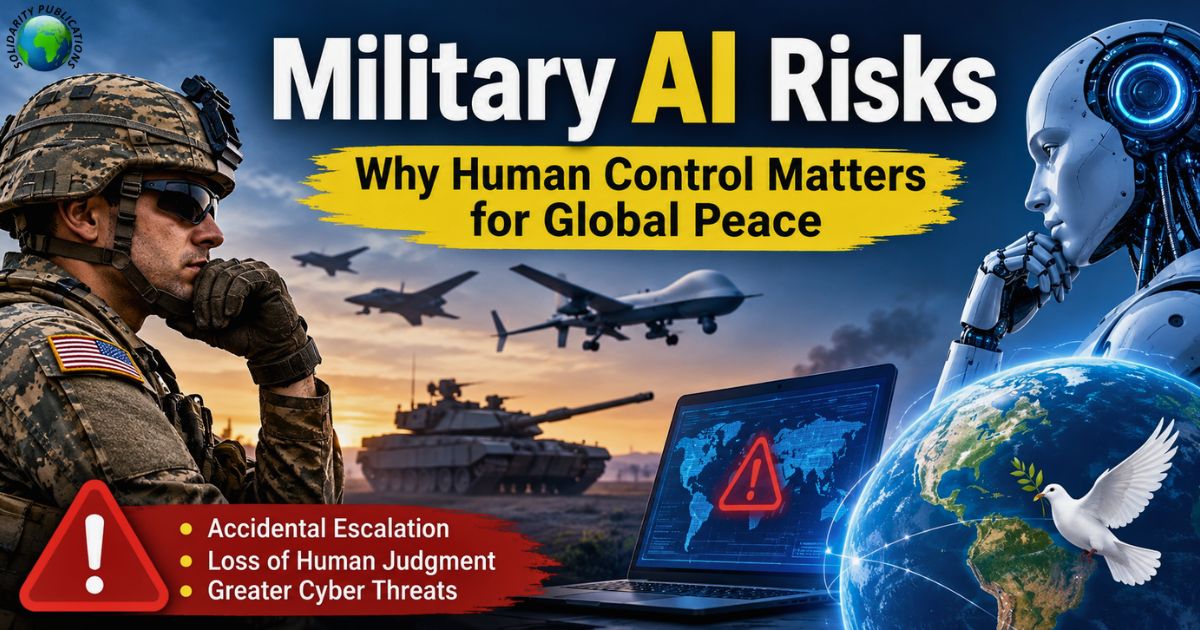
Artificial intelligence is changing how militaries collect information, plan operations, and assess threats. These tools can help military personnel process large amounts of data faster. However, faster decisions do not always lead to better outcomes. Mistakes can happen when systems use poor data, produce misleading recommendations, or operate in situations they were not designed to handle.
The growing use of military AI raises important questions about safety, responsibility, and international security. Although AI may offer military advantages, it can also create risks for civilians and increase tensions between countries. Understanding these military AI risks is essential for the United States and other nations. The challenge is to use new technology responsibly while keeping people accountable for decisions that could affect human lives and global peace.
For a broader understanding of this technology, explore how AI Could Change Global Conflict in 2026 and influence international security.
What Is Military AI and How Is It Used?
Military AI refers to artificial intelligence systems that support military tasks. These systems can analyze intelligence reports, examine images, identify patterns, and help personnel assess possible threats. They may also support logistics, equipment maintenance, surveillance, and operational planning. In modern warfare, computers can process information much faster than people can manually review large amounts of data. Yet their conclusions still depend on the quality of their information and the limits of their design.
Military AI does not always control weapons directly. Some systems simply provide recommendations to human operators, while others may perform certain functions with limited human input. AI decision-support systems can help commanders compare information and consider possible options. By contrast, autonomous weapon systems can select and engage targets without further human intervention once activated. These differences matter because each system creates distinct safety and accountability concerns. The International Committee of the Red Cross (ICRC) explains how autonomous weapons raise serious humanitarian, legal, and ethical questions.
What Are the Benefits of Military AI?
Military AI can help personnel understand complex situations more quickly. For example, an intelligence team may need to review satellite images, sensor reports, and other information from several sources. AI tools can help sort these records, identify unusual patterns, and highlight details for further review. This support may improve situational awareness and help commanders consider their options during demanding situations. AI can also help predict equipment maintenance needs and improve supply planning, potentially reducing delays during military operations.
Another possible benefit is reducing the time people spend on repetitive or dangerous tasks. AI-supported systems may help monitor remote areas, assess equipment conditions, and organize information from difficult environments. However, these benefits depend on reliable data, careful testing, and appropriate human review. A system can save time while still producing an incorrect result.
| Potential benefit | Why safeguards still matter |
| Faster data analysis | Incorrect or incomplete data can produce misleading results. |
| Improved planning support | Commanders must evaluate AI recommendations in context. |
| Predictive maintenance | Faulty predictions can still cause equipment problems. |
| Remote monitoring | Sensors may miss important details or misidentify objects. |
| Logistics support | Unexpected conditions can make previous predictions unreliable. |
The main point is that AI can support military personnel, but it cannot guarantee accurate decisions or prevent every operational problem.
What Are the Main Military AI Risks and Operational Challenges?
Major military AI risks include unreliable information, system failures, cyber threats, and excessive trust in automated recommendations. AI systems learn patterns from data, but that data may contain gaps, errors, or hidden biases. A system trained under one set of conditions may also perform poorly when the environment changes. For example, unfamiliar weather, damaged sensors, or unexpected activity could make its results less reliable. These problems become especially serious when commanders have little time to check an AI-generated recommendation.
Operational Risks of Military AI
The operational risks of military AI also include software weaknesses, interference by hostile actors, and unclear system limits. An attacker might try to manipulate the information an AI system receives or exploit weaknesses in the networks supporting it. Human operators may also become too dependent on automated advice, especially when a system appears confident or produces results quickly. This tendency is known as automation bias. These concerns show why military organizations need reliable cybersecurity, regular testing, and meaningful human oversight.
Civilian Harm, Targeting Errors, and Accountability
Errors in military targeting can put civilians at risk when AI systems help identify or assess potential targets. A system may misinterpret an image, overlook important context, or fail to distinguish a military object from a civilian one. Human operators must therefore examine the available evidence rather than accept a machine-generated recommendation automatically. Clear accountability is equally important. Military commanders, operators, and other responsible personnel must understand their roles when AI systems contribute to decisions. Technology should not become an excuse for avoiding responsibility when an action causes harm.
Another concern is the AI arms race. Countries may invest rapidly in military AI because they fear falling behind their rivals. This competition can create pressure to deploy systems before their safety and reliability receive enough attention. If countries lack transparency or trust, each may interpret another country’s technological progress as a growing threat. That cycle can increase suspicion and weaken international stability. Responsible development requires countries to consider not only military advantages but also the wider consequences of deploying powerful systems.
Can Military AI Increase Nuclear Escalation Risks?
Military AI could affect nuclear stability even when the technology operates outside nuclear weapons themselves. AI systems may help analyze intelligence, monitor military activity, or support decisions during a crisis. However, a faulty warning or misleading recommendation could influence how leaders interpret another country’s actions. Shorter decision timelines may also leave leaders with less opportunity to verify information, seek advice, or consider peaceful alternatives. If countries fear that their nuclear capabilities are becoming more vulnerable, tensions could increase further. These are possible nuclear escalation risks, not inevitable outcomes. They highlight why careful human judgment, reliable communication, and sufficient time for decision-making matter during international crises.
Why Does Human Control Matter in AI Warfare?
Meaningful human oversight helps ensure that AI supports military decisions instead of replacing human judgment. People need enough information, training, and time to question a recommendation or reject it when evidence appears weak. They must also understand what a system can and cannot do. A human who simply approves every computer recommendation does not provide meaningful control. Effective supervision requires attention, clear authority, and the ability to intervene when a system behaves unexpectedly.
The principle of human control of AI weapons is especially important when decisions involve life and death. Human personnel must assess the situation, consider possible civilian harm, and judge whether a proposed action is lawful. This includes following international humanitarian law, which sets rules for protecting people during armed conflict. Human judgment must remain central when computer tools support military decisions. Effective control also requires suitable training, testing, documentation, and clear limits on how systems may be used.
How Can Countries Reduce Military AI Risks?
Countries can reduce military AI risks by testing systems thoroughly before deployment and checking their performance under different conditions. Testing should examine inaccurate data, unexpected situations, cybersecurity weaknesses, and possible failures. Military organizations also need clear rules about when personnel may use AI recommendations and when human review is required. If a system repeatedly produces unreliable results, its use should be restricted until the problem is understood and corrected. Continuous monitoring is also important because a system that performs well in testing may still face unfamiliar conditions during real operations.
International cooperation is also necessary. Countries can share safety practices, improve crisis communication, and discuss common expectations for responsible military AI. Governments should establish clear principles for reliability, transparency, accountability, and human oversight. These principles can provide a useful starting point for testing and responsible deployment. International discussions can also help countries build trust, address shared concerns, and reduce the risk of misunderstandings involving military AI.
Conclusion: Balancing Military AI Risks and Global Peace
Military AI offers potential benefits in data analysis, planning, logistics, and situational awareness. However, these advantages come with serious concerns about reliability, civilian harm, cybersecurity, and nuclear stability. The technology itself cannot guarantee good decisions. Outcomes depend on how systems are designed, tested, supervised, and used in real situations.
Protecting AI and global peace requires meaningful human control, clear accountability, and cooperation between countries. Governments must address safety concerns before relying on AI in high-stakes military decisions. They also need to preserve time and space for diplomacy when tensions rise.
Military technology will continue to develop, but human judgment and responsibility must remain central to its use. Readers interested in peace, justice, and international security can explore more perspectives through Real Path to Peace and DeeKnight. You can also explore the importance of peace in today’s world to understand why stability and cooperation matter. A safer future depends on balancing technological progress with the protection of human life and international stability.
Frequently Asked Questions
Q:1 What Are the Main Military AI Risks?
Answer: The main military AI risks include targeting errors, cyberattacks, unreliable data, and excessive reliance on automated decisions. These problems can threaten civilian safety and increase international tensions.
Q:2 Why Is Human Control Important in Military AI?
Answer: Human control ensures that people remain responsible for military decisions, especially those involving human lives. It also helps prevent machines from making critical decisions without proper judgment and oversight.
Q:3 Can Military AI Threaten Global Peace?
Answer: Yes, military AI can increase international tensions, encourage an AI arms race, and create risks during military crises. Without proper safeguards, these developments could threaten global peace and stability.
Q:4 How Can Military AI Be Used to Support Peace?
Answer: Military AI can support peace by improving conflict monitoring, identifying potential threats, and helping prevent misunderstandings. However, these benefits require responsible use, human oversight, and international cooperation.
Q:5 How Can Countries Prevent Military AI From Increasing Conflict?
Answer: Countries can reduce conflict risks through responsible AI policies, human oversight, cybersecurity, and diplomatic cooperation. International agreements and clear safety standards can also help protect global peace.
Leave a Reply